Getting my Bearings
Navigating in more traditional ways

It went a bit like this. A compass is on the mandatory kit list for Ultra Trail Snowdonia and although I have a little one, there was talk of a “baseplate” compass, which I figured is a proper one you use with a proper map. I’d been awake since 5am, didn’t need to leave my friend’s flat in London to get to work until 7:30am, so I went down a small rabbit hole of research. What compass should I be buying for my entry-level interest? I watched a video of Steve Backshall teaching you how to get your bearings. He uses the ruler along the side of the compass to mark out where he wants to go, turns the dial on the compass and then walks towards a tree. No blue dot, no dithering about trying to get phone signal. Just leaning a paper map on his knee and looking inquisitively off into the distance.
It’s all very wholesome and appealing. It’s a little old-fashioned, bordering on nostalgia-porn. I don’t want it to be that, and I don’t want to be one of the people who is swept up in all that, my sweet compass nothing more than a hipster GORP-core accessory. But at the same time, who amongst us still has this skill which was once so important? I don’t really expect to ever need it - I hope I am never lost in the mountains without phone signal or battery and need to navigate to safety. But it could happen, and what’s the harm in learning a new (old) skill just in case?
There’s something in the process of map reading that I think is crucial to the way we intuit, perceive, approach and process the world around us. It’s a pattern of thought that I used to have but realise I have now lost. I see how irritated I get trying to navigate by GPS and remember how patient and satisfied I used to be following road signs and maybe even a hand-drawn map, copied from a larger map before leaving the house. It’s the same reason I take time to wander London’s streets, dithering from Clerkenwell to Victoria only by my memory and my own desire. I walk down the roads that I find interesting, and am constantly re-calibrating according to the road names and landmarks around me. You could argue that a map and compass distracts from this kind of holistic approach, but the crucial element is in noting the world around you. In that respect, it’s entirely well-suited to this age of mindfulness. You get your bearings in order to move on. It’s about finding your present position in order to explore. You are constantly adjusting to the present moment, always with the freedom to safely veer of course.
Well anyhow, all this watching Steve Backshall suddenly left me on a bit of a tight schedule to get to work in time. I had plotted a route to run through South London and half of it was unfamiliar to me. I was an anxious blue dot, but as soon as I saw the tall buildings at Nine Elms I half-sprinted towards them. A landmark, at last: there was no room for doubt. What’s more, that’s another series of streets I’ve added to my mental map of London. Slowly but surely, South East is getting drawn in.
By mid-afternoon, my phone battery was dying. I was leaving work - heading to Covent Garden for a wander before heading home - and it sat there on the desk directly beside the charging cable. A moment’s thought would have sufficed to avoid this situation. I was reliant on this device to pay for things, including my travel. I’d just have to ration it. I found the information board at Vauxhall Bus Station which told me which bus I would need to get and I found the timetable which told me they run every 6-9 minutes. The process felt familiar and I think in my pre-City Mapper life, I did this all the time. Simply standing and waiting for a bus however felty extremely unfamiliar. I twitched to check my phone for updates. I looked at my watch. I analysed others around me. I tried to simply breathe and yes, wait. 6-9 minutes. Any minute now.
On the bus, in no time at all, I watched tourists on the street take photos around Westminster Abbey. A couple of friends spent forever getting just the right shot outside the gated, roped, very closed entrance. She stood on tiptoes so that her arm was at a better angle to lean casually on the gate. They shuffled a little further to the left, presumably for better framing. Good God, I thought, what did we used to do with our time in the age of film cameras? You had one chance to take the photo, so you took it and moved on. But there I go again with my wholesome nostalgia-porn. Am I getting old?
I bought my compass. I also bought a map of the Dolomites, drawn on the softest, most elegant map paper I’ve ever felt. I spent a lot of time in the basement of Stanfords poring over three maps, trying to work out which one covered the course for the Lavaredo 120km race. Tre Clime was right on the edge of the paper - would I need to go beyond it? Via the third map and some gratifying detective work, I figured it out. “This is the one I need,” I said to the sales assistant.
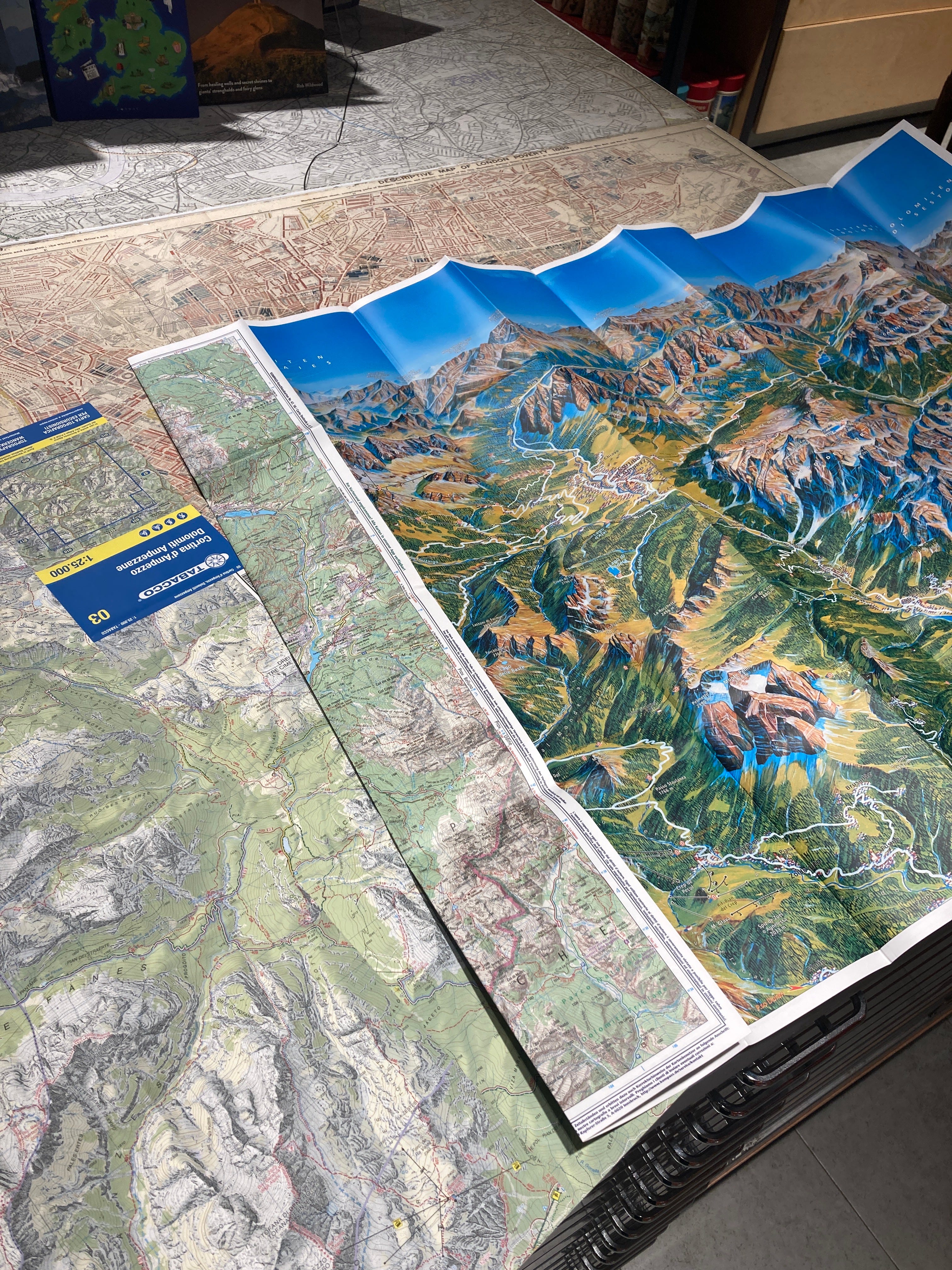
“Need.” I really don’t need it. The course is well-marked, I’ll have the route on my phone and my watch and there will be thousands of other runners. But these were the words that fell out of my mouth. Need. Was my choice of wording just the product of the day’s train of thought? Did I simply misspeak? Or was it, indeed, some primordial voice arising from deep within, the part of me that learned this way to navigate first, and so prefers it? To be honest, I think I’m just sick of looking at my phone for everything else. I want a landline. I want to meet my friends at a set date and time. I want to pay for things with loose change in the bottom of my purse. My thumbs ache, my eyes ache, my joints are stiff.
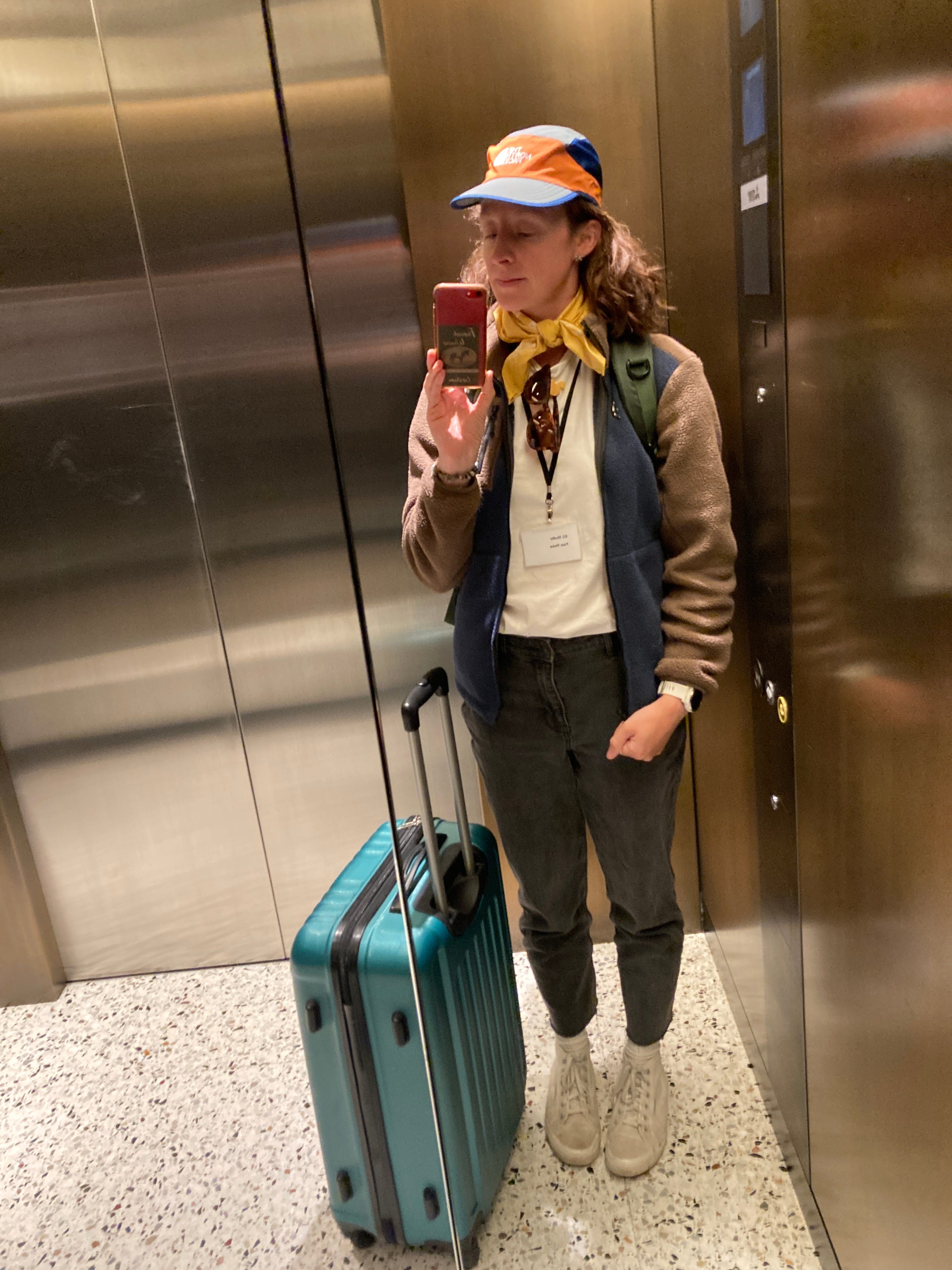
I arrived in London on Monday with my suitcase and a colleague asked me, “Have you come from somewhere? Are you going somewhere?” I didn’t know how to explain my situation succinctly so I eventually said, “Here is where I am going.” We agreed that that’s perhaps a good line to live one’s life by.
So that’s where we ended up, really: here is where I’m going. Then maybe here. But always with my hipster compass, of course.