
Sea Level
Running through the mountains on the Isle of Arran

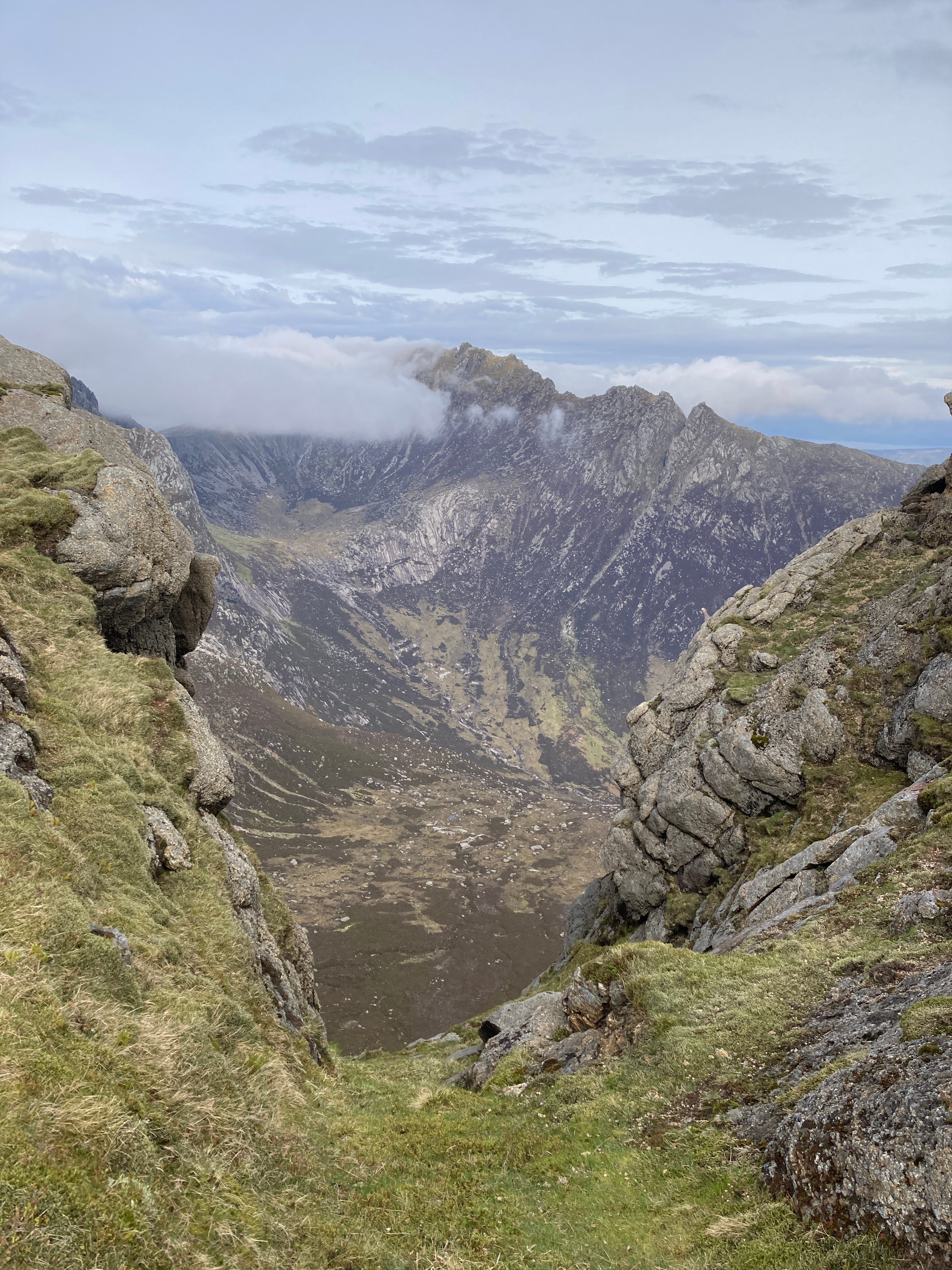
My grandparents built a house at the bottom of a mountain. It is on the Isle of Arran. New people live there now and they have turned the garage into an actual room with a window. Every summer as a child I went to that house for at least a week and stared up at Goat Fell and its surrounding peaks, watched the clouds engulf the summit and then reveal it again. It enchanted me while my grandma hummed along to a cassette tape as she did the ironing, while my granddad did the dishes, while I was feasted on by Scottish midges in the garden.
Despite this early and repeat exposure, mountains have not played a huge role in my life. As a child, I only actually went up Goat Fell once. Once! It was right there! But the sea was also there, and I needed parental supervision, and if you’ve ever been to Arran, you’ll understand that there is so much else to do on that island and there is never enough time. The magic of that island is its ability to make you stand or sit still, mentally if not physically, so a whole day can go by and you’ve only been for a coffee.
I returned to the island as an adult recently. My last remaining grandparent had died, my Papa, and the Isle of Arran seemed like an ideal place for us to park and heal our grief, to marinade in some warm memories while making new ones. It was my first time back across the Firth of Clyde since 2016. I wanted to run up Goat Fell. If it was okay with the family, I would take a chunk out of the Thursday morning to do it. The route I had planned took in a couple of the other peaks, but no big deal, Goat Fell was the highest mountain on the island so it would be smooth sailing after that. “I’ll get out early and be back by lunch.” I told them.
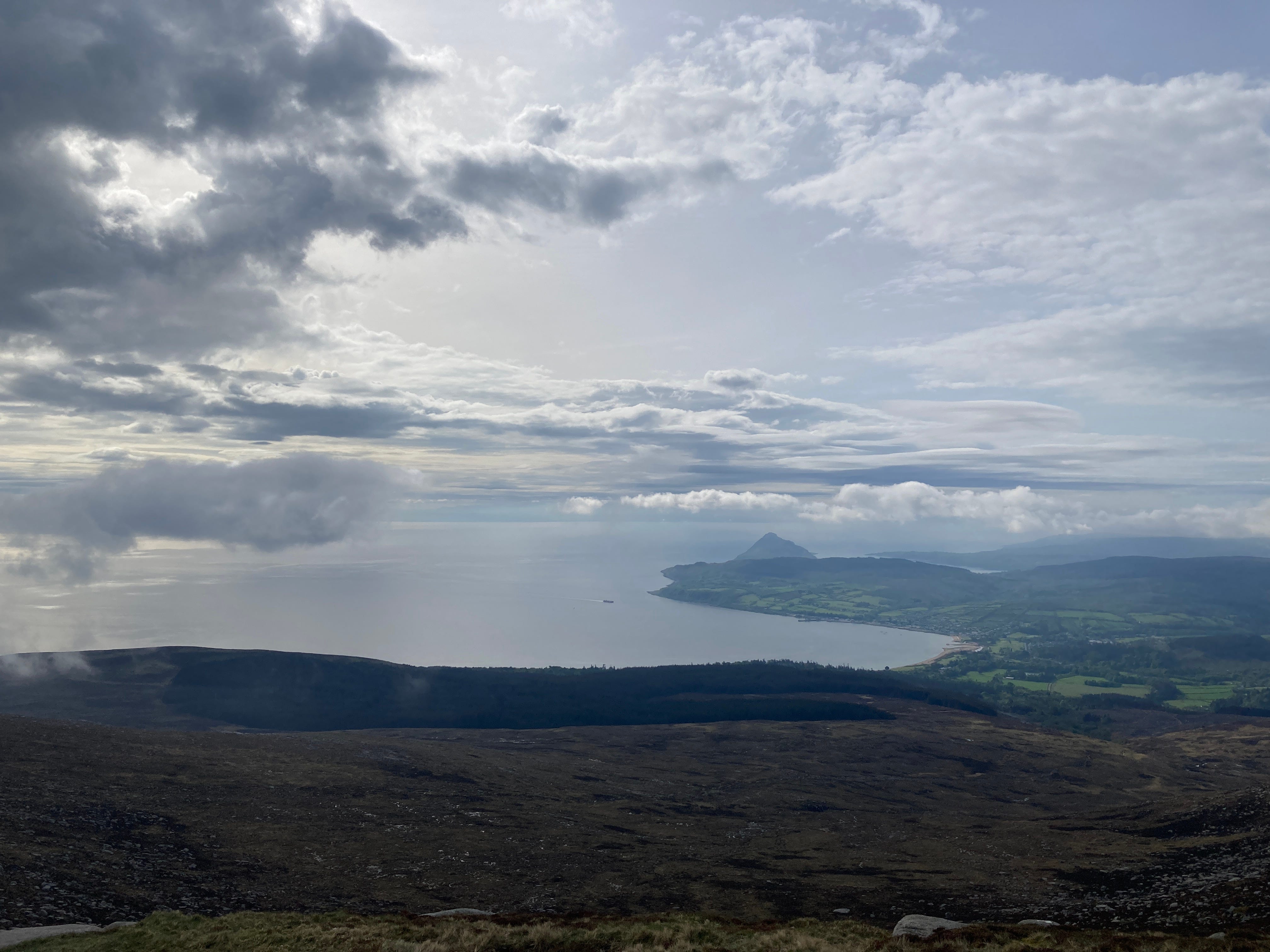
Goat Fell was pretty straightforward. Chìr Mhòr however was the hardest mental effort I have ever put my body through. I stared into the abyss of my own mortality on multiple occasions and wrestled with the fact that no parent would save me, no one would take me away from this challenging terrain but myself, I had to be the grown up here and I had to stay sharp and make good decisions.
I planted my feet and my trekking poles and pressed on up a vertical maze of scuffed trail and sharp rock. I reached the top and finally looked down and around. The valley looked like a rib cage complete with a heart, a mound in the topography, caught in the pause between beats. All morning and afternoon, there had been no sound besides the wind and, inexplicably, a cuckoo. I was starting to feel strange. I was starting to feel properly normal.
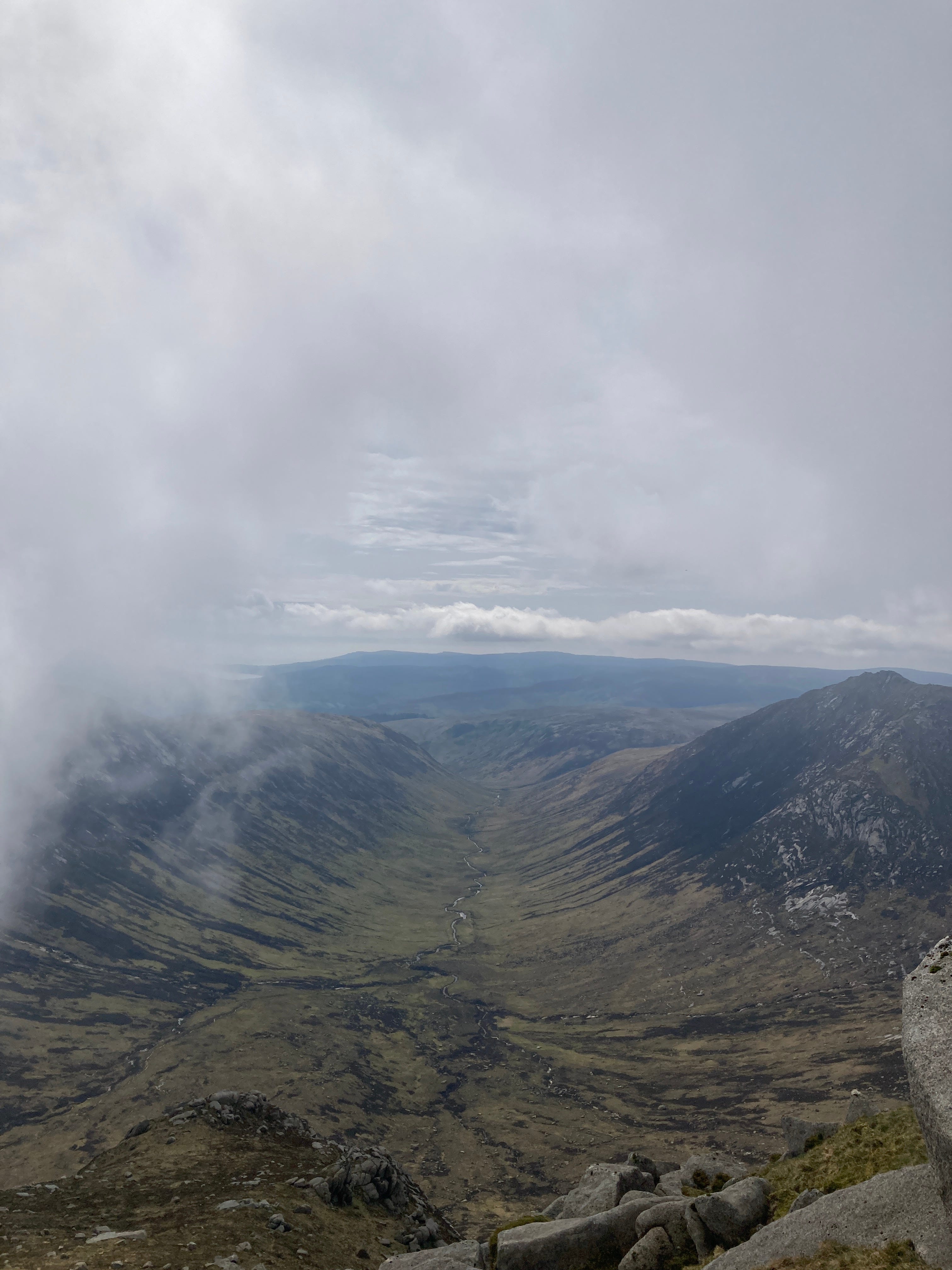
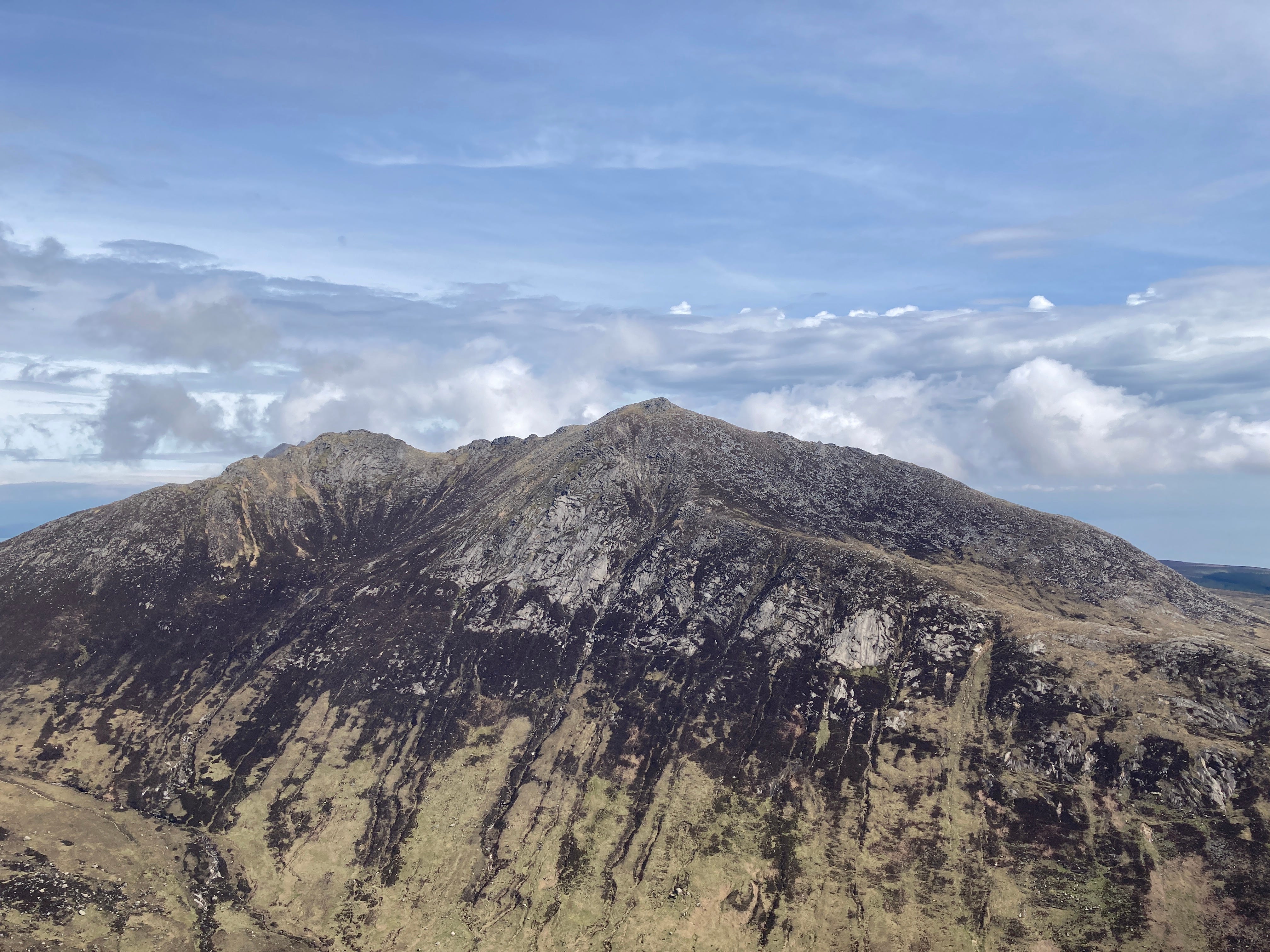
I made it to my final peak, Beinn a’ Chliabhain. The route I took followed a horseshoe shape so at this point, I was looking straight across the valley at Goat Fell, at my own sweet morning, at what felt like a lifetime ago. It struck me that this was like seeing the other side of the moon: I had only seen one side of Goat Fell my whole life, and this face was only visible via some effort like the one I was currently enduring. It was a privileged position here, beside a sheer drop, in the middle of this narrow path. One wrong move would have been so easy. I had to stop for a second, for a minute, just stop. I leaned against the sheer cliff face. I clutched my poles in my hand but let my body go soft. We all hold so much all the time.
From this distance it’s difficult to establish perspective on size: the opposite mountain is both a simple hill and an impossible expanse of inhospitable, rocky wilderness. I stared at it while all of history, volcanic and glacial, stared back at me. I saw myself in it, from the cuckoo’s view, in a whirl of passing clouds with loose legs and a soft jaw. I am sat steady and careful amongst some vegetation.
I would move on soon but time had become fluid. I didn’t understand effort and motion in the same way as I usually would. This is what mountains teach you: in dealing with each present moment, you accumulate the passage of each rock and each clump of heather until you’re at the top, across the saddle or finally back at sea level. I would not make it back in time for lunch. I was simply trying to make it back. Ultimately, this is what made me get up and keep moving.
I have spent the weeks since that trip wondering exactly what happened to me in that moment when I stopped. What did I think? Nothing much. I wasn’t paralysed by fear, everything was fine, caution was rational but fear was not. That whole moment belonged to a part of myself that I didn’t understand. I didn’t need to catch my breath - I hadn’t been moving hard or fast - and the trail up ahead didn’t require any more forethought than I had previously mapped out. I wasn’t gazing in wonder at the view necessarily, spectacular though it was. I just needed to be exactly where I was. And I needed to let go of everything I’d been carrying.
I realise now that what I had done in those mountains was a pilgrimage. I wanted to understand the very crux of what lead my grandparents there. I wanted to see what particular trait might have been passed down to my dad and on to me. I wanted to breathe in everything that connects me to that place, that binds me to it on a molecular level. Because that’s how it feels: to leave it is to feel as though a unique corner of my spirit is being sucked out through the soles of my feet, destined to sit and wait on a rock at Brodick pier for my return, like a selkie skin.
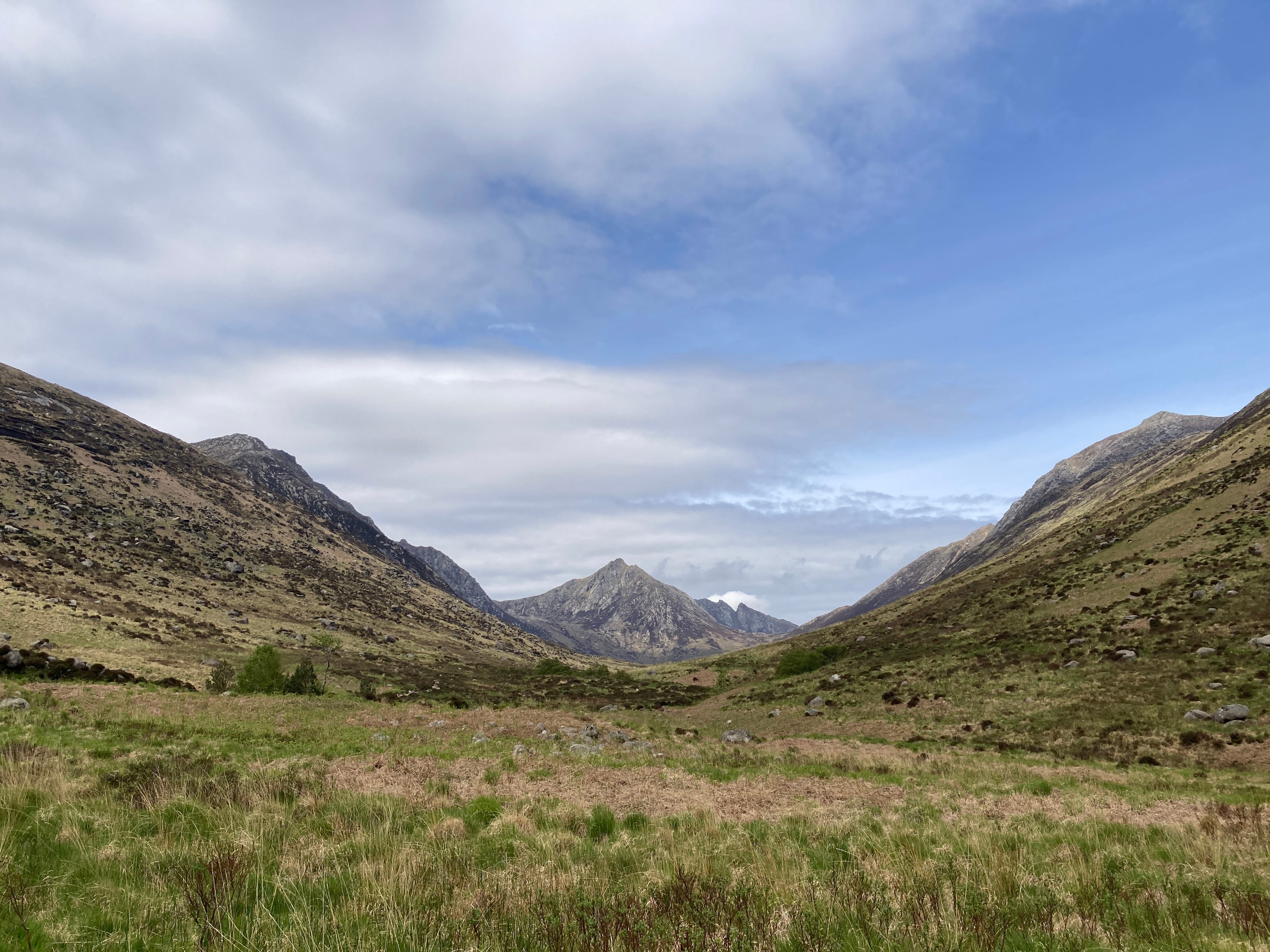
When I remember that cuckoo’s view, I think I see the purpose of the pilgrimage. It is right there: just my body, myself, in stillness and perpetual motion. To be an individual, both born of and separate from the lineage that brought me here. The last vestiges of my identity as a granddaughter are no longer physically tangible. It’s a curious kind of loneliness. But the mountains don’t care; you are alone here as you will be in so many ways throughout your life. But what a precious thing, to stand on the edge of that rib cage, to stare down at the river through the valley threading away from that beating heart, out into the sea.